10 Budget Living Room Decor Ideas That Actually Work

Disclosure: As an Amazon Associate, I earn from qualifying purchases.
A living room can have a decent sofa, a working TV, and still feel like nothing is finished. That’s a common problem, and it usually has nothing to do with money. It has to do with a few specific gaps — an empty wall, a rug that’s too small, lighting that’s too flat — that quietly make the whole room feel unplanned 10-living-room-decor-ideas-on-a-budget.
Below are 10 changes that address those gaps directly. None of them require replacing your furniture, and most of them can be done on a modest budget.
Table of Contents
Toggle1. Get a Rug That’s Actually Big Enough

A rug that’s too small is one of the most common reasons a living room feels disjointed. If the rug only fits in the open floor space and none of the furniture touches it, the seating area ends up looking like it’s floating separately from the rest of the room.
A better approach: pick a rug large enough that at least the front legs of your sofa and chairs rest on it. That single adjustment ties the furniture together visually.
You don’t need a high-end rug for this. Neutral tones — beige, gray, soft brown — tend to work with more furniture styles and are easier to build around later. If you have kids or pets, a washable or low-pile option will hold up better over time.
3.6/5⭐
2. Change the Cushion Covers, Not the Sofa

If your sofa still holds up but looks worn out, the fastest fix isn’t a new sofa — it’s new cushion covers.
A matching three-piece set isn’t necessary. Mixing textures usually looks better: one plain cover, one textured cover, and one smaller patterned piece. Buying covers instead of full cushions also means you keep the original inserts and can change the look again later without much cost.
Compared to buying a single decorative object, a handful of well-chosen cushion covers usually has a bigger visual impact on the room.
4.2/5⭐
3. Add a Mirror Where It Can Reflect Light

A mirror placed opposite or near a window can make a room look brighter during the day, since it bounces natural light back into the space.
Size matters here. A small mirror on a large wall can look out of place rather than intentional. If you don’t want to invest in a large piece, a cluster of two or three smaller framed mirrors can fill the same wall space and still look organized.
4.0/5⭐
4. Fill Empty Walls Without Buying Art

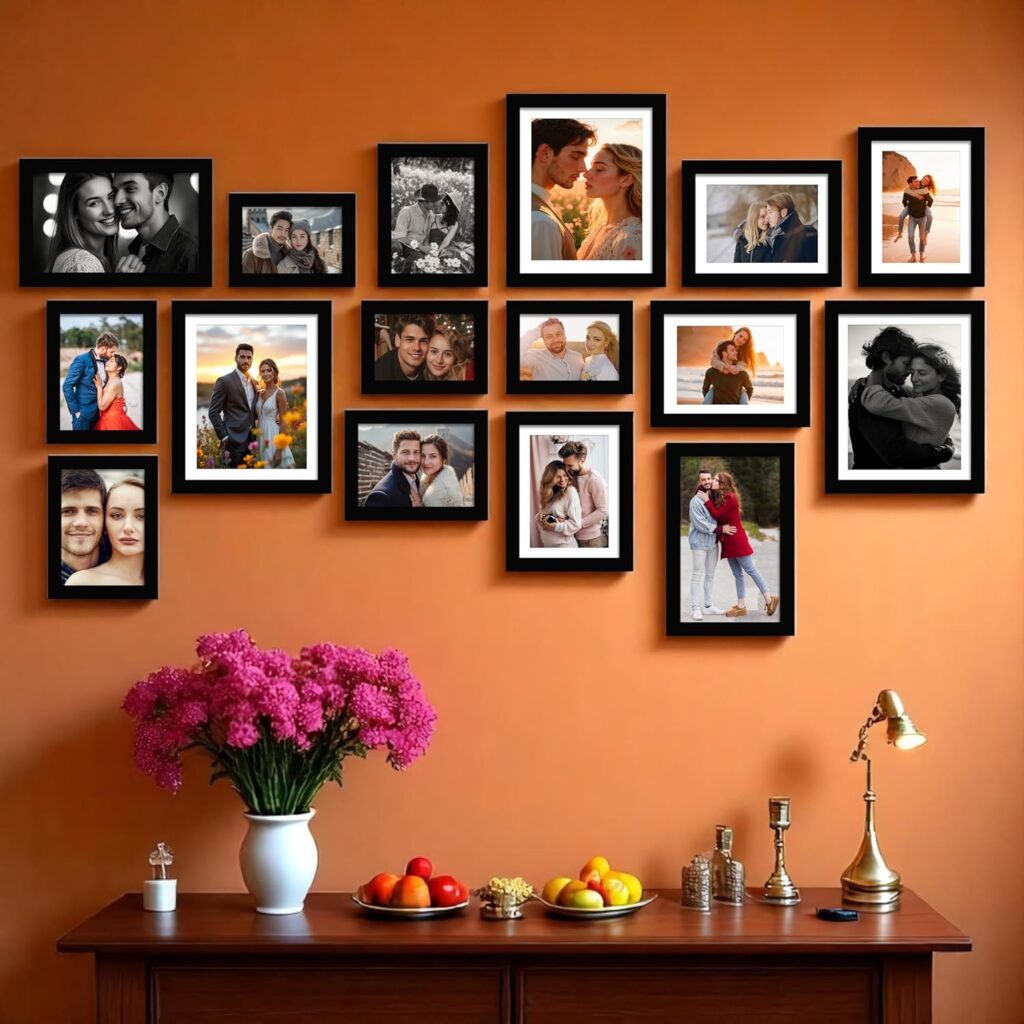
An empty wall is one of the clearest signs of an unfinished room, but you don’t need original artwork to fix it. Printed photos, simple illustrations, or typography prints in inexpensive frames can work just as well — the key is keeping the frames and spacing consistent.
A layout that tends to work:
- One larger print as the anchor
- Two medium prints
- Two smaller prints
- Frames in the same or a complementary color
Before hanging anything, lay the pieces out on the floor and adjust the spacing. It’s easier to fix a layout there than to patch extra holes in the wall afterward.
5. One Plant Can Do More Than Several Small Ones

You don’t need multiple plants to make a room feel more alive. One medium plant near the sofa or the TV stand is often enough.
If you’re not confident about plant care, choose something known to tolerate lower light or infrequent watering, based on the amount of natural light your room gets. And skip the temptation to buy the largest plant available — a smaller plant in a well-chosen pot generally looks more deliberate than a large one squeezed into a space it doesn’t fit.
4.1/5⭐
6. Fix the Lighting Before Anything Else

Lighting gets overlooked more than any other item on this list, but it has one of the biggest effects on how a room feels — especially in the evening.
A single overhead light tends to flatten a room. Layering light at different heights usually works better:
- Ceiling light for general brightness
- A floor lamp near the seating area for a softer glow
- A small table lamp for warmth near a shelf or console
If your fixtures allow it, a warm-toned smart bulb can help you adjust brightness and color without buying additional lamps
3.8/5⭐
7. Keep the Coffee Table Simple

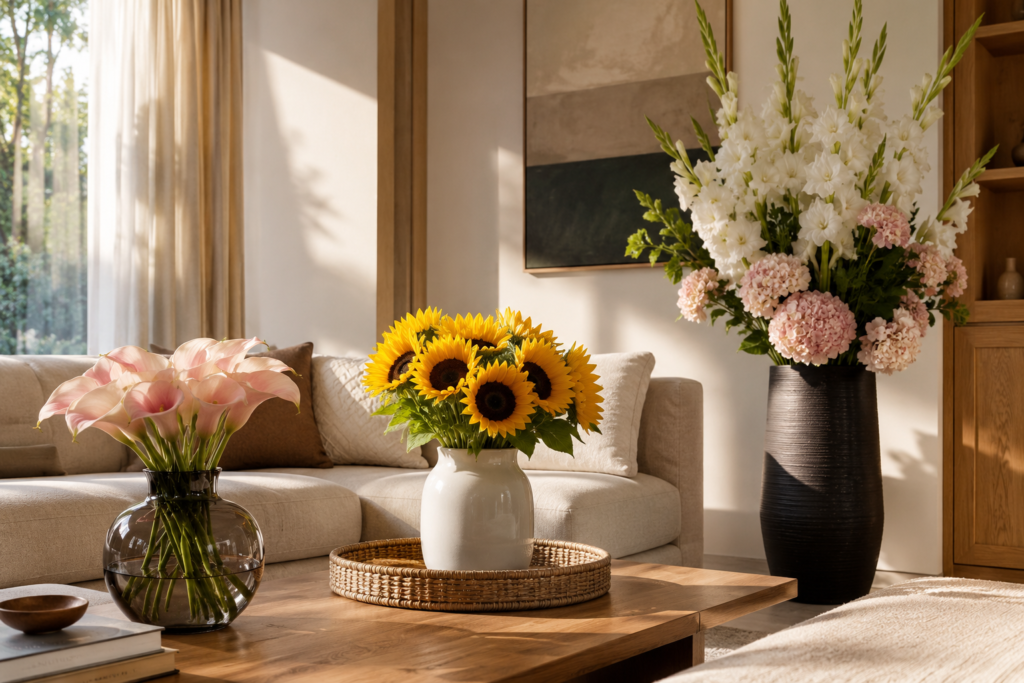
A coffee table covered in objects tends to look cluttered rather than styled. A simpler combination usually reads better: one tray, one small plant or vase, and one book or decorative object.
The tray is useful beyond looks — it lets you clear the table quickly for food or work and put everything back in place afterward. Leaving some open space around the arrangement is part of what makes it look intentional rather than crowded.
8. Rehang Your Curtains Higher and Wider
If your curtain rod sits directly above the window frame, the room can end up looking shorter and narrower than it actually is. Mounting the rod a few inches higher and a bit wider than the window frame, with curtains that reach close to the floor, creates a longer visual line and makes the ceiling feel taller.
Simple solid-color curtains, measured correctly and hung at the right height, generally look more expensive than they cost. Matching them to your existing wall and sofa colors tends to work better than trying to coordinate every item in the room exactly.
9. Simplify the Area Around the TV

The wall behind the TV is often the largest blank space in a living room, but adding too much around the screen usually makes it look busier, not better. A floating shelf, a narrow console, a plant, a few books, and one piece of art is generally enough. Managing visible cables with clips or a cable sleeve is a small step that makes a noticeable difference in how tidy the setup looks.
10. Rearrange What You Already Own
This is the only idea on the list that costs nothing. Before buying anything new, try moving the sofa slightly away from the wall, changing the angle of a chair, or repositioning a side table closer to the seating area.
The goal is a layout that leaves enough space to walk through comfortably. If people have to squeeze between the coffee table and the sofa to get through the room, the arrangement isn’t working — no matter how it looks in photos.
How to Prioritize When Money Is Tight
If your budget is limited, it’s better to spend on the items that take up the most visual space — rug, curtains, cushions, and lighting — rather than several small decorative pieces. A rug and a set of cushion covers will usually change the room’s appearance more than a handful of small ornaments spread around the shelves.
What Makes Inexpensive Decor Look Good
Four things tend to matter more than price:
- Scale — don’t put a small piece of art on a large wall.
- Spacing — decorative objects need room around them to look intentional.
- Texture — mixing materials like wood, fabric, glass, and metal adds depth.
- Color — a simple base palette with a few stronger accent colors reads better than a room full of competing colors.
An inexpensive object displayed with attention to these four things will often look better than an expensive one placed without much thought.
Common Mistakes That Waste Money
- Buying too many small items. A handful of tiny decorations rarely has the same effect as two or three larger, purposeful pieces.
- Matching everything exactly. Colors that complement each other usually look more natural than a perfectly matched set.
- Ignoring evening lighting. A room can look completely different after dark, so it’s worth checking both.
- Pushing every piece against a wall. This isn’t always the best layout — leave space for people to move through the room.
- Decorating before decluttering. New decor added to a cluttered room rarely solves the underlying problem.
- Buying trending items that don’t fit your taste. Popularity online doesn’t guarantee it will look right in your specific space.
A Simple Order to Work Through the Room
- Clear out anything you no longer use.
- Rearrange the furniture you already have.
- Fix the lighting if the room feels dark.
- Add a properly sized rug.
- Refresh cushions, throws, and curtains.
- Add wall decor — mirror, art, or a small gallery layout.
- Add one or two plants.
- Style the smaller surfaces: coffee table, console, shelves.
Maintenance Is Part of the Budget Too
Inexpensive decor still needs upkeep to keep looking good. Dust mirrors and shelves regularly, wash cushion covers, wipe down lamp shades, and vacuum under the rug. For plants, remove dead leaves and water based on what that specific plant needs rather than a fixed schedule. Keeping items clean is a low-cost way to make them look better for longer.
Safety Considerations
Keep cords, lamps, and small furniture out of walking paths. When hanging a heavy mirror or shelf, use wall anchors rated for the item’s weight and your wall type — check the manufacturer’s instructions rather than guessing. Keep candles and anything that produces heat away from curtains, cushions, and plants. In homes with young children or pets, avoid furniture that can tip and small objects that could be pulled down.
For more detailed guidance on preventing furniture tip-overs, the U.S. Consumer Product Safety Commission publishes anchoring recommendations for households with children.
FAQs
Do I need to buy everything on this list to see a difference?
No. Most of these changes work independently. A rug and better lighting alone can noticeably change how a room feels, even without touching anything else.
Is it better to buy a few expensive pieces or several cheap ones?
It depends on the item. For a rug or curtains, spending a bit more on the right size usually matters more than the price itself. For things like cushion covers or small decor, budget options are often enough if the color and texture work with the rest of the room.
How long does a basic living room refresh usually take?
That depends on how much you’re changing and whether you’re waiting on deliveries. Rearranging furniture and decluttering can be done in a day. Adding a rug, curtains, and lighting is usually spread across a few weekends for most people working around a job and other commitments.
Can renters make these changes without violating a lease?
Many of these ideas are renter-friendly, including rugs, curtains, lamps, plants, and leaning mirrors or shelves that don’t require wall anchors. Always check your specific lease terms and the weight limits on any removable hardware before hanging anything.
What should I fix first if the living room feels both dark and cluttered?
Address the clutter first. It’s hard to judge whether lighting is actually a problem until the room is decluttered, since visual clutter can make a space feel dim even with decent light sources.
Final Thoughts
10-living-room-decor-ideas-on-a-budget None of these changes require a full renovation or a large budget. Working through the room in a specific order — layout, lighting, textiles, walls, then small surfaces — tends to produce better results than buying decor items at random. If you only make a few changes, a properly sized rug, better lighting, and refreshed cushions will likely have the biggest impact for the effort involved.