How to Choose the Right Vegetable Chopper: A Practical Buying Guide for Every Kitchen
[Disclosure: As an Amazon Associate, I earn from qualifying purchases.]
Picture this: It’s 7:00 PM on a Tuesday, you’ve just come home tired, and you still need to chop two onions, three tomatoes, and a mountain of carrots before dinner can even start cooking. By the time you’re done, your eyes are watering, the cutting board looks like a war zone, and you’re already exhausted.
After trying a few best vegetable choppers over the years, I realized that having the right tool isn’t about being lazy—it’s about making meal prep far less stressful. When I first tried a simple pull chopper myself, I was genuinely surprised at how much time it saved during busy weeknight dinners. The tricky part, however, is choosing a model that actually works well instead of one that ends up gathering dust in the back of your kitchen cabinet.
This guide breaks down what really matters before buying a vegetable chopper, along with an honest look at some of the most popular options available in India today.
Table of Contents
ToggleWhy Buy a Vegetable Chopper?
Not all choppers work the same way. Before buying one, think about what you cook most often and how much prep work you usually do best vegetable chopper.
Blade Quality and Materials
The blades do all the hard work. Look for 304-grade stainless steel blades. Low-grade metal dulls quickly, rusting after a few washes and tearing your food instead of cutting it cleanly.
For the body, stick with thick, BPA-free ABS plastic. Thin plastic bends under pressure and cracks when you push down on hard items like raw carrots or potatoes.
Mechanical Style
You’ll generally find three designs on the market:
- Pull-cord choppers: These use a string mechanism to spin internal blades. They excel at fine mincing (like onions, garlic, and herbs) and require no power outlets.
- Push-down dicers: These press vegetables through a stationary grid of blades. They are the best choice for making uniform cubes for salads or soups.
- Electric choppers: Powered by a small motor, these process large amounts of food in seconds with zero arm effort.
Capacity
Container sizes usually range from 300 ml to over 1000 ml.
- A 300–500 ml container works well for single cooks or small tasks like mincing garlic.
- A 600–900 ml container suits a standard family meal.
- Anything above 1000 ml is best if you batch-cook meals or feed a large family.
Getting a container that’s too small means stopping every minute to empty it, which defeats the purpose of buying one.
Cleaning and Maintenance
If a chopper takes ten minutes to clean, you’ll stop using it. Look for models with removable blade assemblies and wide containers that rinse clean under running water. A non-slip rubber base is also essential to keep the unit stable while you work best vegetable chopper.
Comparing Popular Vegetable Choppers
| Model | Mechanism | Capacity | Price | Rating | Standout Feature | Best For |
|---|---|---|---|---|---|---|
| Pigeon by Stovekraft | Manual Pull-Cord | 650 ml | ₹220 | 4.0 ★ | Smooth pull action, compact | Daily basic prep on a budget |
| Ganesh Plastic Chopper | Manual Pull-Cord | 725 ml | ₹169 | 4.0 ★ | Non-skid base, fast cuts | Affordable daily chopping |
| CŪRAA ChopLab Lite | Manual Heavy-Duty Pull | 650 ml | ₹649 | 4.0 ★ | Ergonomic grip, steady base | Harder veggies & longer life |
| Borosil Chef Delite | Motorized (300W) | 600 ml | ₹2,139 | 4.4 ★ | Twin blade, auto cut-off | Effortless batch processing |
(Note: Check live retailer listings for up-to-date pricing and current user ratings.)
Honest Breakdown of Popular Models
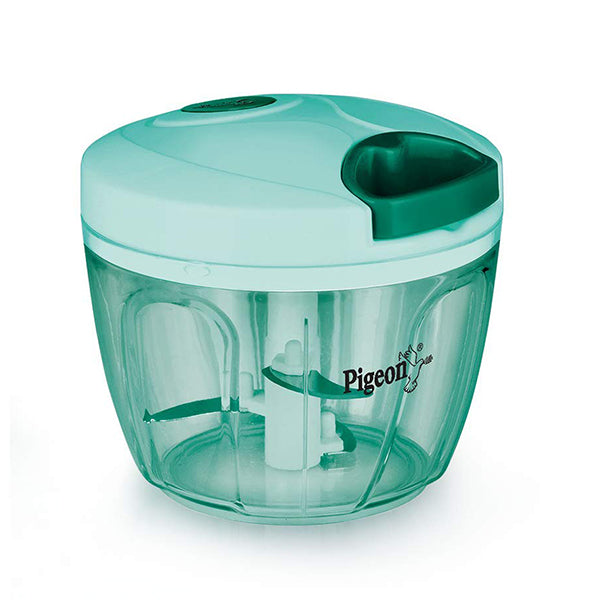
1. Pigeon by Stovekraft Manual Pull Chopper
This pull-cord model is one of the most common manual choppers in home kitchens today.
How it performs:
It uses three curved stainless steel blades that spin as you pull the handle. Pulling it three or four times gives you rough chunks; pulling it eight to ten times minces everything finely. It works well on onions, tomatoes, green chilies, and soft herbs.
Keep in mind:
The nylon cord inside the lid can fray over time if pulled at an awkward angle. It also struggles with raw, hard root vegetables unless you cut them into small pieces first.
A simple, budget-friendly choice for light daily chopping.
2. Ganesh Quick Vegetable Dicer
If you make fresh salads or mixed vegetable curries regularly, a grid-style push dicer makes more sense than a pull model.

You place a slice of vegetable over the stainless steel grid, close the lid, and press down. It produces straight, uniform cubes in a single motion, which helps food cook evenly.
Pushing hard items like raw sweet potatoes through the grid takes noticeable hand force. Cleaning dried food bits out of the blade grid also requires a small cleaning brush rather than a quick sponge wipe.
Ideal for home cooks who need uniform cuts for salads and soups.
3. Alligator Style Heavy-Duty Chopper
This style copies the classic Swedish design known for its heavy frame and thick blade grids.
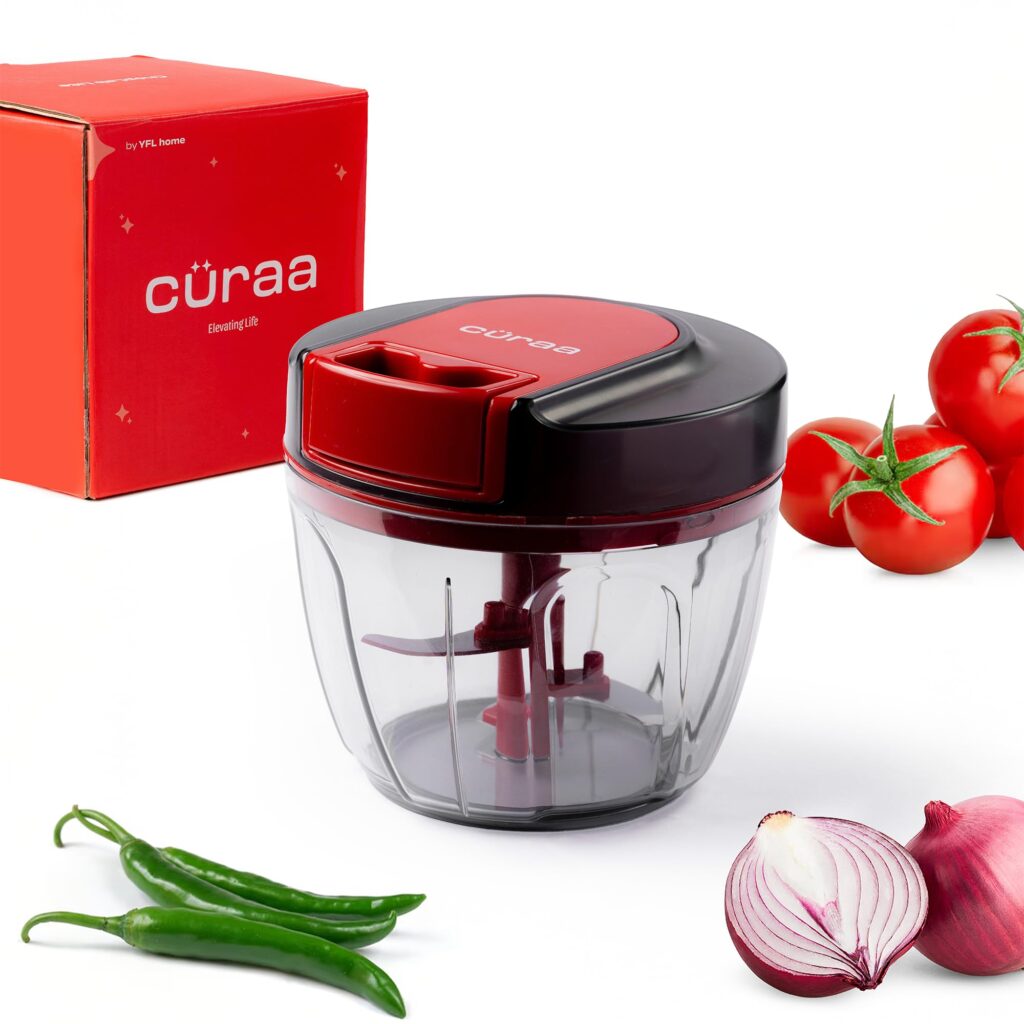
How it performs:
The reinforced plastic body doesn’t flex when you press down hard. Its blades cut cleanly through firm items like onions, cucumbers, and potatoes without trapping or crushing the food.
Keep in mind:
These models cost more than basic plastic choppers and take up more shelf space in your kitchen cabinets.
Bottom line: A solid pick if you want a sturdy tool that handles daily kitchen use for years.
4. Borosil Electric Chopper
Electric models take the physical labor out of food prep entirely.
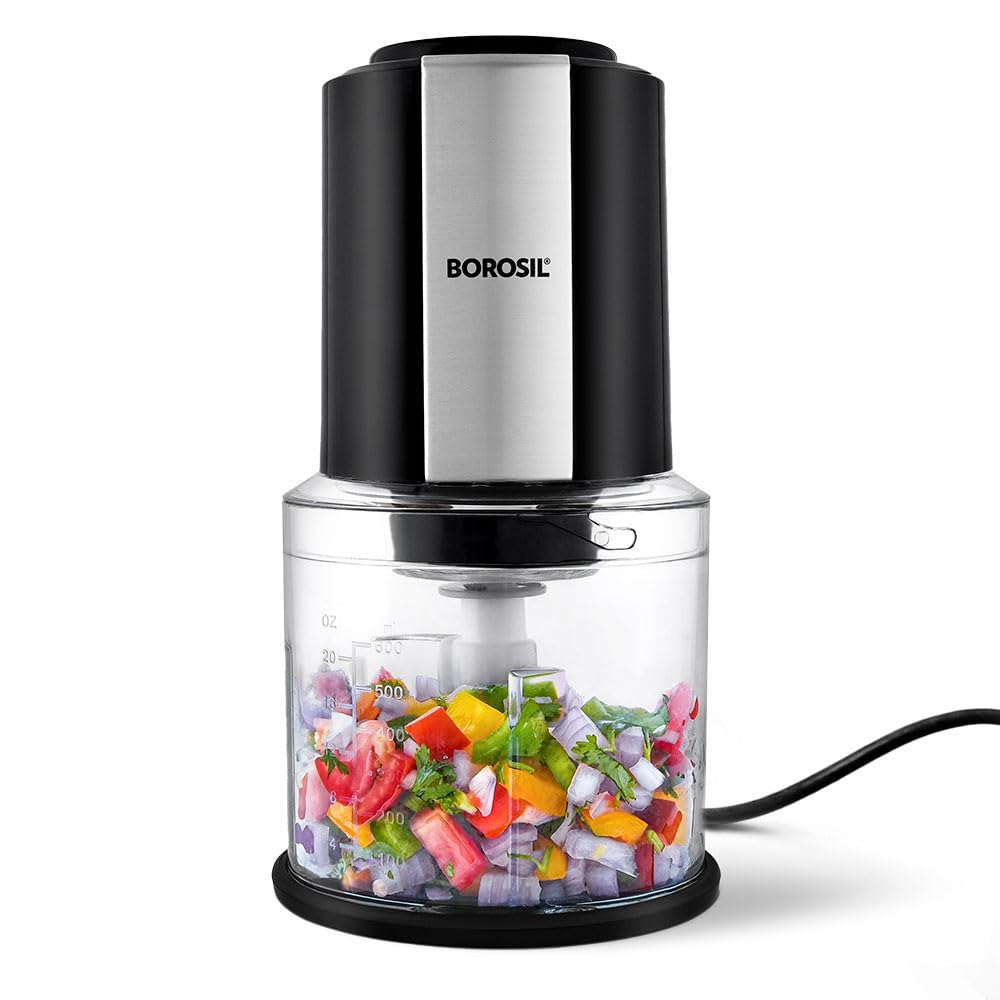
With a press of the top button, the motor spins double-deck blades to process full containers of onions, nuts, or garlic in under ten seconds.
It requires a wall outlet, makes motor noise, and costs more than manual versions. You also need to watch the processing time closely, or your vegetables will turn into a smooth puree instead of a chop.
Bottom line: Great for busy families, elderly cooks, or anyone prepping large batches of food.
Common Mistakes That Ruin Choppers
- Overpacking the bowl: Filling the container to the top jams the blades. Fill it halfway for faster, more even results.
- Loading large pieces: Always cut big vegetables into quarter-chunks before putting them in. Choppers are meant to dice, not break down full onions.
- Putting blades in the dishwasher on high heat: High heat warps plastic frames and dulls sharp steel edges over time. Hand-washing takes less than a minute.
- Storing blades while wet: Even stainless steel can spot or rust if left wet inside an airtight container. Let the parts dry on a rack before putting them away.
FAQ
Can a manual chopper handle raw carrots and potatoes?
Yes, but you need to slice them into smaller chunks or thin disks first. Trying to force a whole raw carrot through a manual blade grid can bend the blades or crack the plastic lid.
How do I stop onions from turning into mush in a pull chopper?
Drain extra moisture by patting the onion dry before chopping, and pull the cord in short, quick bursts. Check the texture after every three pulls so you don’t over-process it into a paste.
Are electric choppers hard to clean?
No, because the motor unit sits on top and never touches the food directly. You only need to wash the bowl, the removable blade post, and the splash lid.
How long do the blades usually last?
Quality stainless steel blades stay sharp for two to three years of normal home use. Hand-washing them immediately after use and avoiding hard items like bone or ice will prolong their lifespan.
Final Thoughts
You don’t need the most expensive model on the market to save time in the kitchen. A simple pull chopper works fine for quick, small tasks like garlic and onions. If you prefer neat, uniform cubes for salads, a sturdy push-dicer is the better choice. Pick the style that fits your actual cooking habits, and meal prep will feel much less like a daily chore.