How to Choose a Dish Drying Rack
Disclosure: As an Amazon Associate, I earn from qualifying purchases.
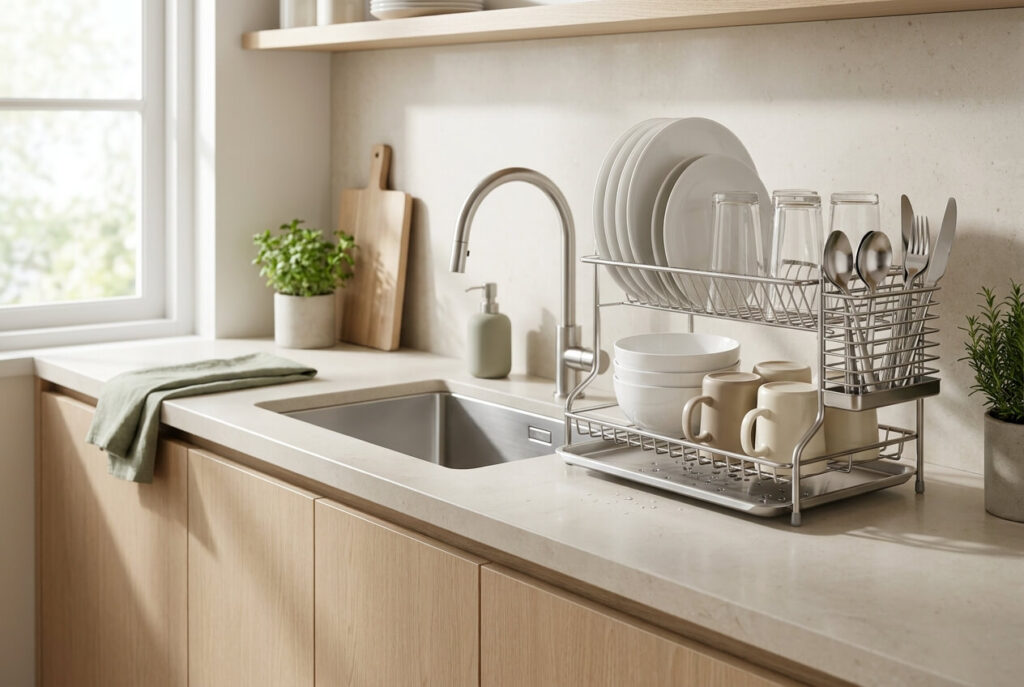
My old dish rack looked great in the store. Sleek metal, compact footprint, good reviews. Two weeks in, I noticed water pooling under it every single day, and my dinner plates kept sliding against each other because the slots were too narrow. That’s a common story, and it usually comes down to one thing: people shop by looks first and function second.
This guide flips that order. We’ll walk through size, rack types, materials, drainage, and the small details that actually decide whether a rack earns its spot on your counter.
Table of Contents
ToggleStart With Your Counter, Not the Rack
Before you look at a single product listing, grab a tape measure. Check the width and depth of the spot where the rack will sit, and the height if it’s going under a cabinet.
A rack that “fits” on paper can still be annoying in real life if it blocks your cabinet doors or eats up your only prep space. This step takes two minutes and saves you a return shipment.
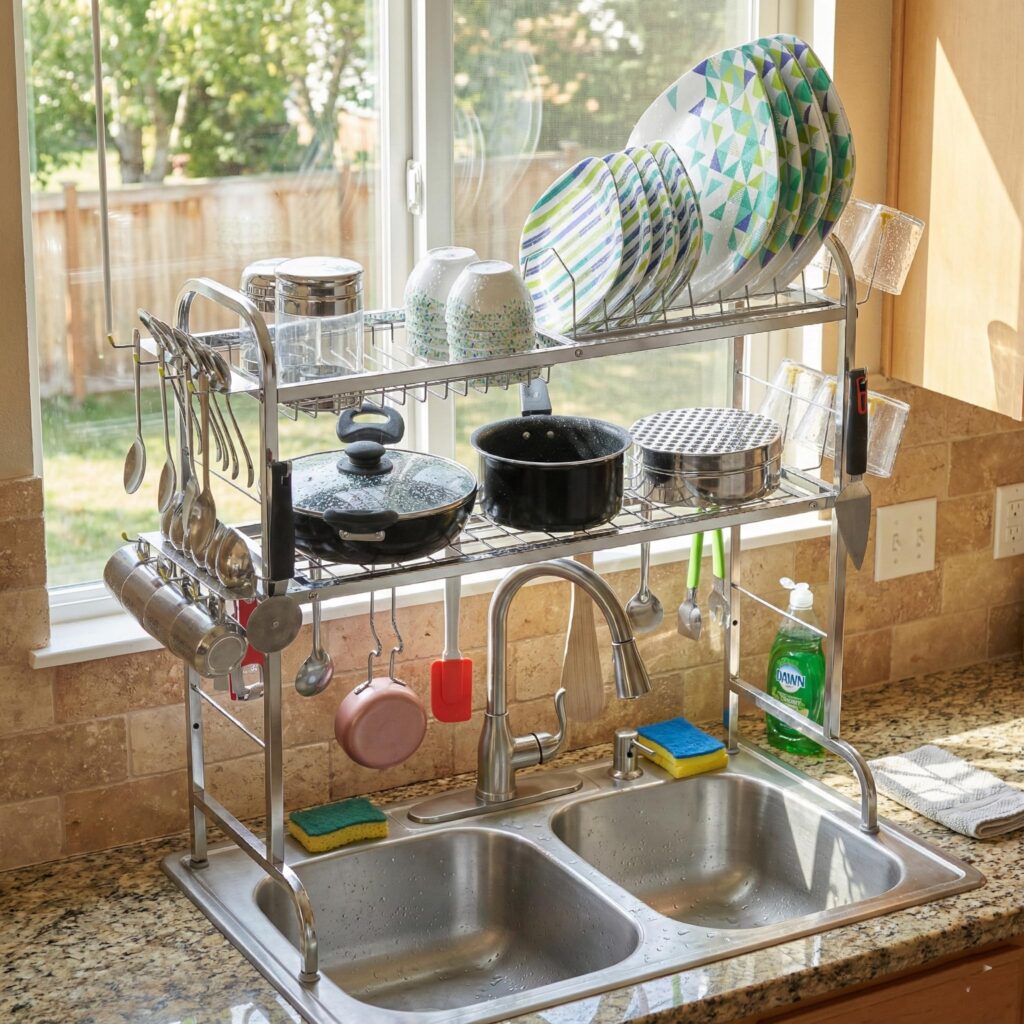
If your kitchen is small, look at narrow countertop racks, foldable designs, or something that sits over the sink instead of next to it. Over-the-sink racks are worth a serious look here — they use space you’re not doing anything else with.
If you’ve got more room, a bigger two-tier rack can work well, but only if you actually generate enough dishes to fill it. A large rack that’s half-empty most days is just wasted counter space.
The Main Types of Racks (and Who They Actually Suit)
Not every rack style fits every kitchen. Here’s how the common types stack up:
Countertop racks are the standard option — sits beside the sink, has sections for plates, bowls, and cups. Nothing fancy, but reliable for daily family use.
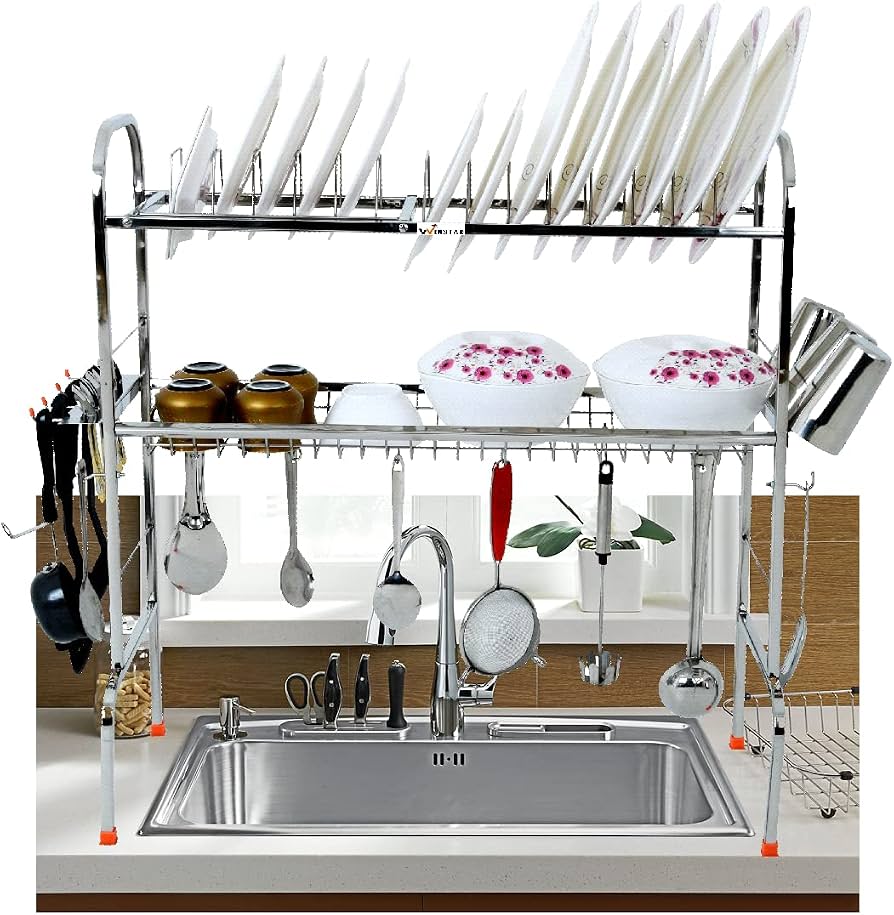
Over-the-sink racks hang across the sink itself so water drips straight down instead of pooling on your counter. Good for tight kitchens, but sink dimensions vary a lot, so double-check compatibility before buying. Adjustable models are the safer bet if you’re not 100% sure of your sink’s measurements.
Two-tier racks stack a second level on top, giving you more capacity without spreading further across the counter. They work well for bigger households, though the upper shelf can make the lower one awkward to reach — more on that below.
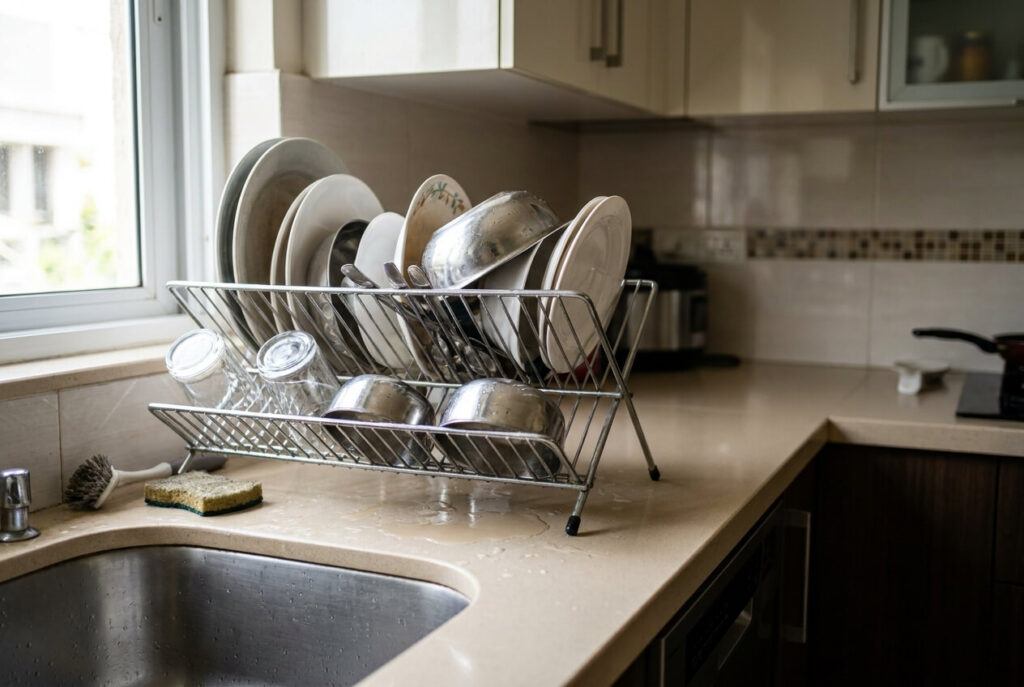
Foldable and roll-up racks are the two options worth knowing if you don’t want a rack sitting out permanently. Fold one flat and tuck it in a drawer when you’re done, or roll it up and hang it. Renters tend to like these because there’s nothing to install and nothing left behind when you move.
Match the Rack to What You Actually Wash
Don’t buy based on the rack’s advertised capacity. Buy based on your actual dishes.
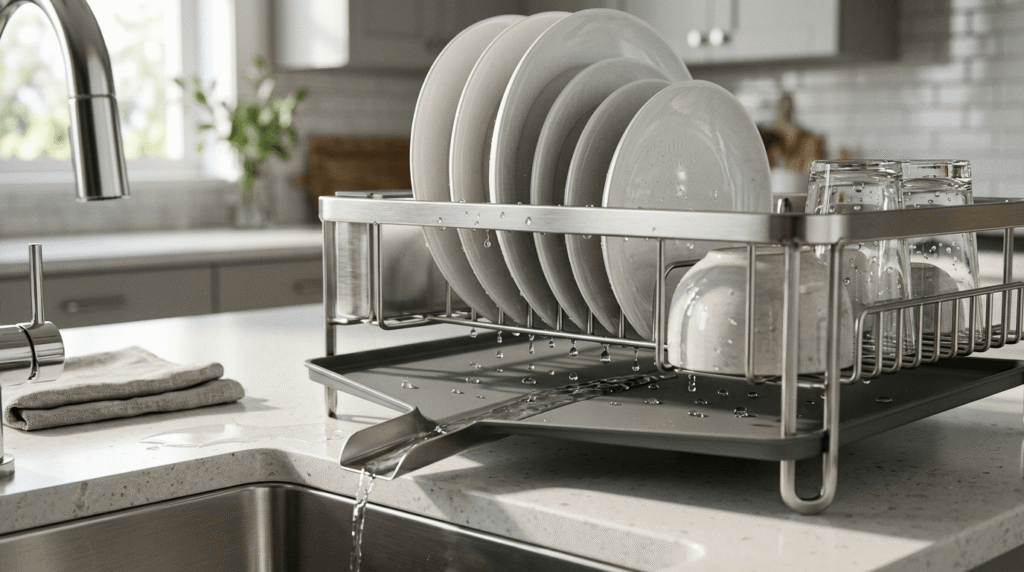
Try this: after your next regular meal, count what you wash. Something like 4 plates, 4 bowls, a few glasses, some cutlery. Now picture that exact pile fitting into the rack you’re considering — not a stock photo pile, your pile.
A rack with a dozen narrow plate slots is useless if your everyday dinner plates are on the larger side and don’t sit comfortably in them. Check the plate slot width against your actual plates, especially if you use thick ceramic dishware.
Drainage Is the Feature That Actually Matters Most
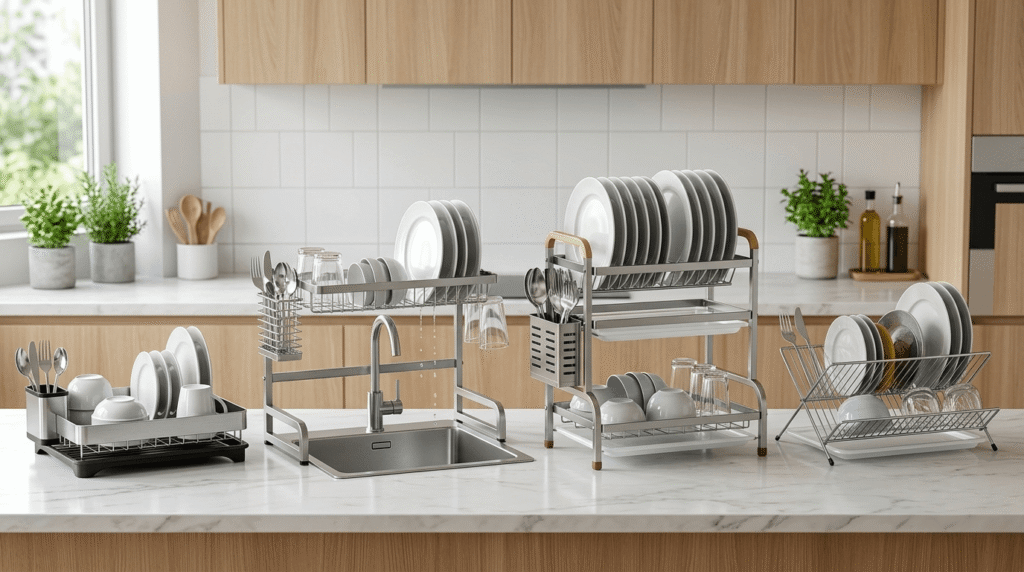
This is the one spec worth obsessing over. A rack can look sturdy and organized and still leave you wiping down a wet counter every day if the drainage isn’t handled properly.
Look for a sloped tray or a spout that channels water toward the sink rather than just collecting it underneath. Removable trays are easier to keep clean than fixed ones. If a listing doesn’t mention where the water goes, that’s usually a sign it just pools.
What the Rack Is Made Of
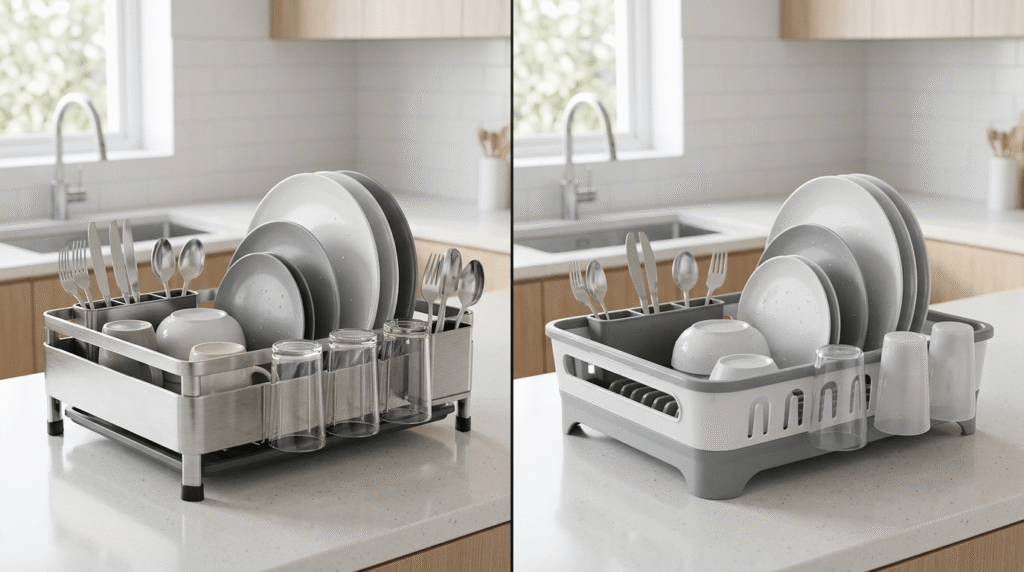
Stainless steel holds up well under constant water exposure, largely because of the chromium in the alloy — it forms a thin protective layer that resists rust ([source: British Stainless Steel Association](https://bssa.org.uk/wp-content/uploads/2022/03/SSAS4.01-Introduction-to-Corrosion-Resistance.pdf)). That said, not every rack labeled “stainless steel” is built the same way. Cheap welds and thin coatings can still rust, so check reviews for real-world corrosion complaints rather than trusting the label alone.
Plastic is lighter and cheaper, which makes it a fine option if you’re renting or just need something temporary. It can get brittle or stained faster than metal, though, especially with cheap plastic left in constant moisture.
Aluminum lands in between — light enough to move around, generally holds up okay, but the finish quality still varies a lot between brands.
Small Details That Are Easy to Skip
A few things that don’t show up in a five-second glance at a product photo, but matter once the rack is actually in your kitchen:
– Feet matter more than people expect. Non-slip rubber or silicone feet keep the rack from sliding when you set down a heavy plate, and protect stone or glass countertops from scratches.
– Stability beats capacity. A rack rated for 20 plates isn’t much use if it wobbles with six. Check the base width and how the frame is built, especially for two-tier models where the top shelf needs real support.
– Utensil holders should drain. A closed cup traps water at the bottom and turns into a smell you don’t want. Removable holders you can wash separately are worth the extra dollar or two.
– Glasses need real clearance. Tall glasses and mug handles are easy to overlook until you’re trying to wedge a wine glass between two wire bars. If you use stemware regularly, check for a dedicated hangingslot.
Two-Tier Racks: Worth It or Not?
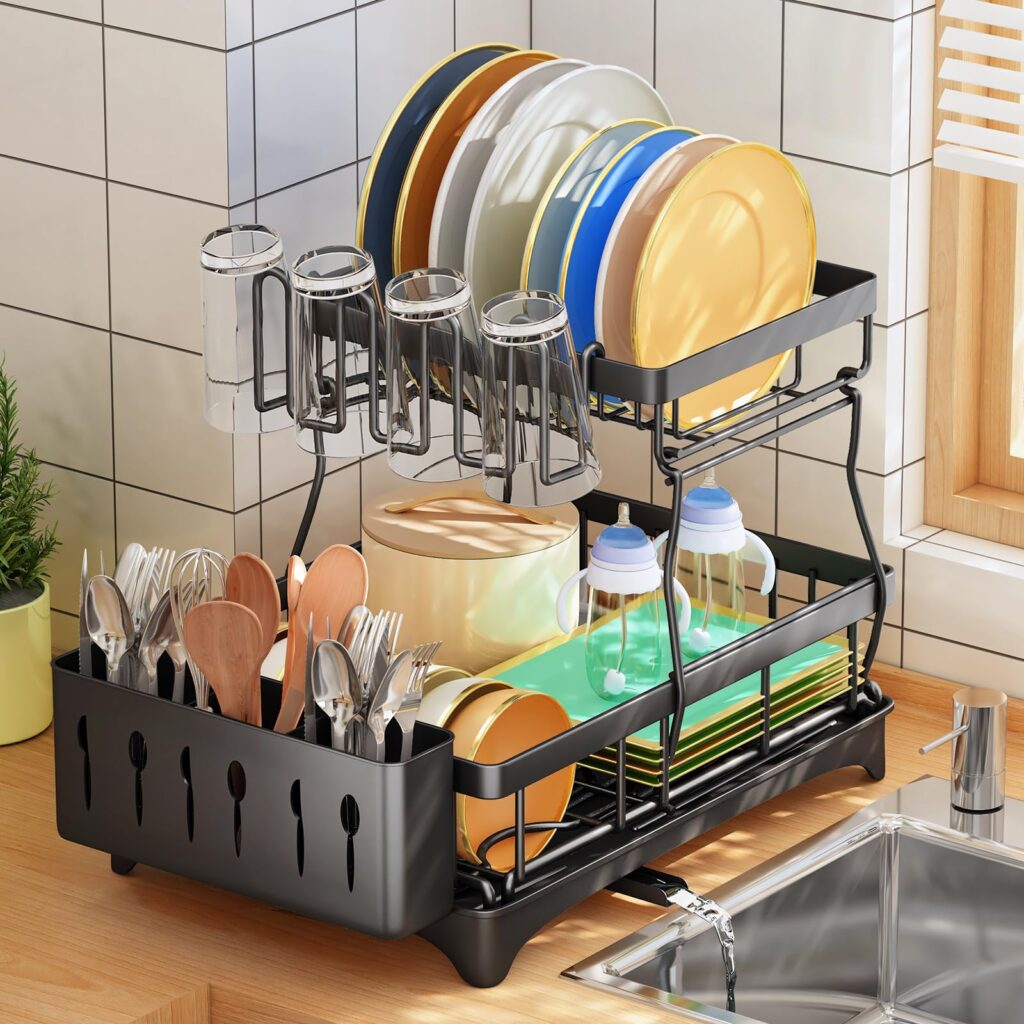
Two-tier setups look like a clear upgrade — more capacity, same counter footprint. But the trade-off is real: the top shelf can make the bottom section harder to reach, and if the frame isn’t built well, a heavy plate up top can make the whole thing feel unsteady.
They’re worth it if you regularly have enough dishes to use both levels. If you’re usually washing a handful of items after each meal, a single-tier rack will probably be less hassle day to day.
If You're Buying an Over-the-Sink Rack, Measure First
This is the type most likely to get returned, because sink sizes vary so much. Before you order one, measure:
1. Sink width
2. Sink depth
3. Clearance under any cabinets above
4. The distance between the edges the rack will rest on
Don’t trust a listing that just says “fits most sinks.” Go with an adjustable model unless you’re certain about the exact dimensions.
Keeping It Clean
A rack sitting in constant water and food residue needs upkeep, or it becomes its own cleaning problem. A simple routine works fine:
1. Pull all the dishes out.
2. Empty and rinse the drainage tray.
3. Wash the rack itself with warm water and dish soap.
4. Get under the feet and around any joints, where grime tends to build up.
5. Rinse and let it dry fully before reloading it.
Once or twice a week is usually enough for regular household use — more often if you notice residue building upsooner.
Rust Is the One to Watch For
Even good stainless steel isn’t fully rust-proof if the protective layer gets damaged or the manufacturing quality is poor. When you’re comparing listings, skip past the star rating for a second and look through the photo reviews specifically. Rust spots, peeling coating, and discoloration show up in customer photos well before they show up in the product description.
What Fits Your Situation
| Your Situation | Rack Type Worth Considering |
|---|---|
| Small apartment | Compact countertop rack |
| Very tight kitchen | Over-the-sink rack |
| Family of four or more | Two-tier or larger rack |
| Renting | Foldable or roll-up rack |
| Wash dishes once a day | Medium countertop rack |
| Wash after every meal | Larger rack with better organization |
If you’re linking specific products from this table, note that current Amazon pricing and star ratings will need to be added — they change too often to state accurately in an evergreen article.
Common Mistakes Worth Avoiding
– Skipping the measuring step. A rack that looks compact in photos can be bigger than expected on your actual counter.
– Buying on looks alone. A good-looking rack with poor drainage is still a rack you’ll be wiping down daily.
– Oversizing it. More capacity than you need just takes up counter space you could use for something else.
– gnoring how glasses and mugs fit. Plates get all the attention in product photos; glasses often don’t.
– Trusting studio photos over recent reviews. Real customer photos tend to show the rack’s actual behavior better than marketing shotsdo.
Budget: What's Actually Worth Paying For
You don’t need a premium rack to get a good one. A basic compact rack handles most households fine. Spend more only if you specifically need better materials, more capacity, or a more capable drainage system — not just because a pricier option looks nicer online.
If you’re ranking what matters, size and stability come first, drainage second, and everything else — capacity, extra features, appearance — comes after that.
A Few Questions Worth Asking Before You Order
What size should I get?
Measure your counter first, then compare that against the rack’s actual listed dimensions — not just the category it’s marketed under (like “compact” or “large”).
Is stainless steel actually better?
Generally yes for durability, but the specific build quality matters as much as the material itself. Check recent reviews for rust complaints regardless of what the listing claims.
Are two-tier racks worth the extra height?
Only if you consistently have enough dishes to use both levels. Otherwise a single-tier rack is usually easier to live with day to day.
How often should I clean the rack itself?
Once or twice a week for typical use, and sooner if you notice standing water or food residue building up.
What’s the single most important thing to check before buying?
Drainage. A rack that holds your dishes fine but leaves water sitting on the counter creates more work than it saves.