Manual vs Electric Vegetable Chopper: Which Is Better for Your Kitchen?
[As an Amazon Associate, I earn from qualifying purchases.]
Prepping vegetables for dinner often takes longer than the actual cooking. Dicing onions, slicing tomatoes, and chopping herbs by hand can drag out your time at the kitchen counter.
Vegetable choppers aim to fix that problem, but choosing between a manual model and an electric one isn’t always straightforward. Both designs speed up meal prep, yet they suit completely different cooking styles and budgets.
This guide breaks down how manual and electric vegetable choppers compare across build quality, daily performance, cleaning effort, and cost so you can pick the right tool for your home.
Table of Contents
ToggleQuick Comparison: Manual vs Electric Choppers
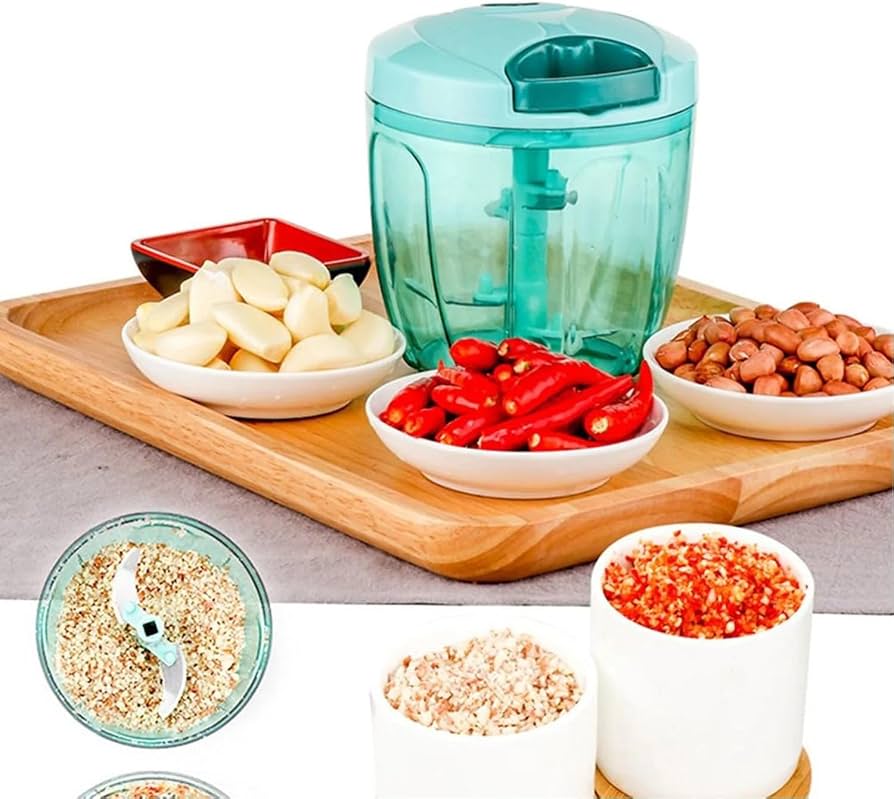
A manual chopper uses human power. You pull a cord, press a plunger, or turn a handle to spin sharp stainless steel blades inside a bowl.
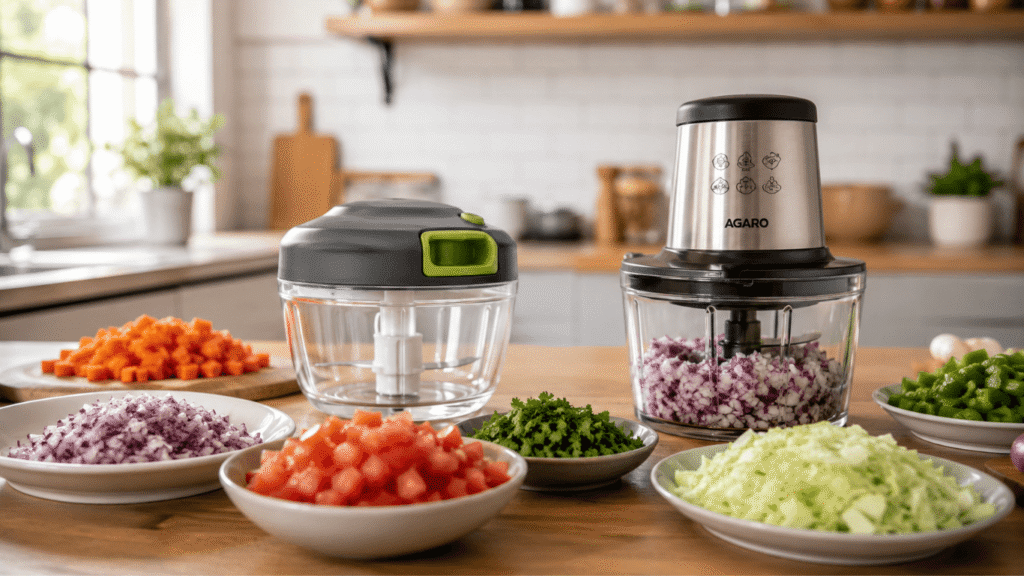
An electric chopper relies on a small motorized top or base. You press a single button or pulse cap, and the motor spins the blades automatically.
Here is how their general features stack up side by side:
| Feature | Manual Chopper | Electric Chopper |
|---|---|---|
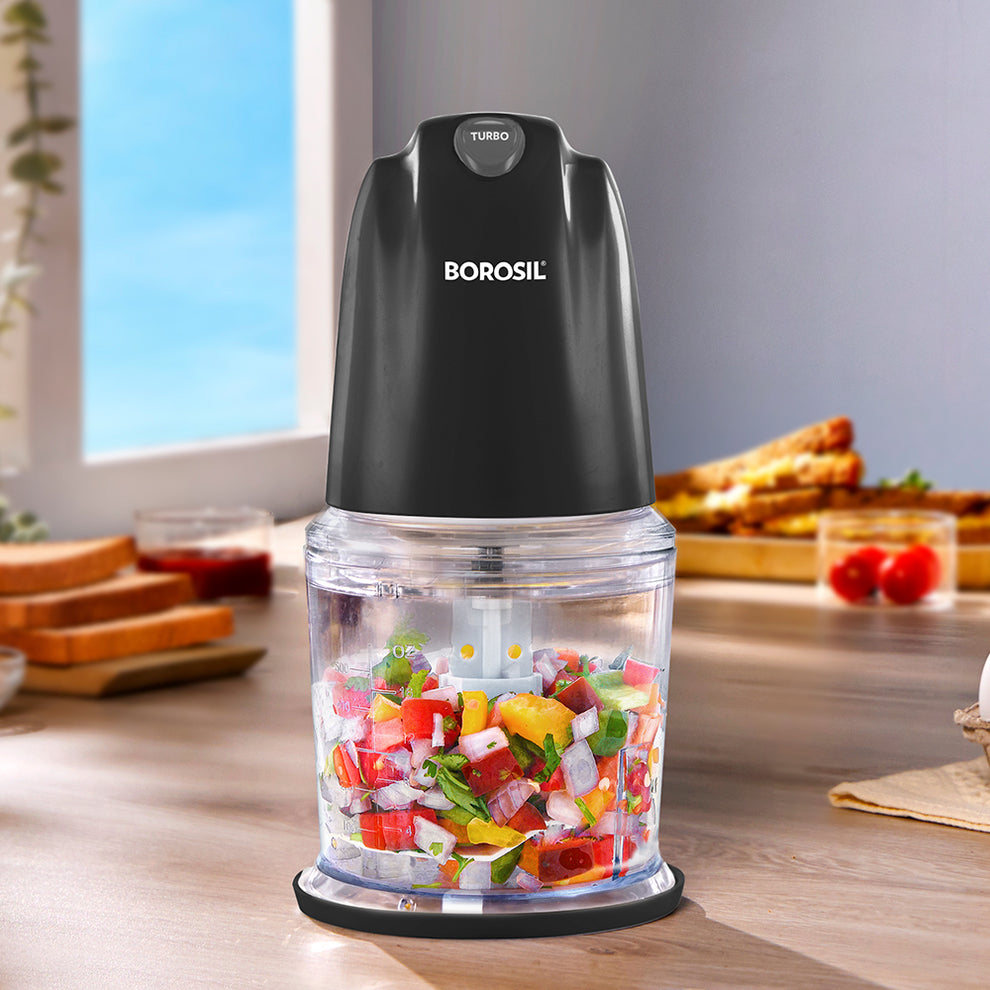
| Example Model | Plastic Manual Chopper | Borosil Chef Delite 300W |
| Power Source | None (Physical effort) | Electricity (300W Motor) |
| Processing Speed | Moderate | Fast |
| User Effort | Requires pulling cord | Single button press |
| Noise Level | Silent | Low motor noise |
| Cleaning Difficulty | Very simple | Easy (bowl and blades only) |
| Capacity | 750 ml | 600 ml |
| Current Price | ₹289 | ₹2,139 |
| Customer Rating | 4.2 / 5 Stars | 4.4 / 5 Stars |
Build Quality and Storage
Manual Choppers
Manual models are compact and lightweight. They usually consist of three main parts: a clear plastic bowl, a removable blade spindle, and a lid with a pull mechanism.
Because they take up minimal space, they slide easily into standard kitchen drawers or small cupboards. High-quality units use thick, BPA-free plastic and heavy-duty nylon cords. Lower-priced versions often feature thinner plastic that can crack if dropped onto hard floors.
Electric Choppers
Electric choppers are heavier because of the internal motor. The motor housing sits on top of or beneath the bowl.
Bowls are commonly made of heavy plastic, glass, or stainless steel. Glass and steel bowls last longer because they don’t scratch or absorb food odors over time. However, the motor assembly means these appliances take up dedicated counter space or lower cabinet room.
Performance and Daily Use
Chopping Speed and Capacity
For tiny tasks, like chopping one small onion or a handful of garlic cloves, a manual chopper is remarkably efficient. You don’t need to unravel power cords or locate an open wall outlet.
When you prepare food for large family dinners or batch-cook for the week, electric choppers excel. Their larger bowl sizes handle bigger portions, and the motor chops through heavy volumes in seconds.
Consistency of Cuts
An electric chopper offers greater consistency. The motor spins at a continuous speed, giving you evenly sized pieces of cabbage, carrots, or onions.
Manual choppers rely on your physical rhythm. If you pull the cord unevenly, you might end up with a mix of fine bits at the bottom and larger chunks near the top.
Effort and Ergonomics
Pulling a nylon cord ten to fifteen times per batch requires physical force. Doing this repeatedly for multiple batches can tire out your hands and wrists.
Electric models only require light finger pressure on a pulse button. This makes an electric chopper a much better option for anyone dealing with wrist pain, arthritis, or reduced grip strength.
Noise and Portability
Manual choppers operate quietly, making them ideal for early morning meal prep when others are sleeping. They also run without electricity, so you can take them on camping trips or use them during power outages.
Electric models generate motor noise during operation. While they aren’t as loud as full-sized blenders, they are noticeably noisier than manual options.
Cleaning and Maintenance
Cleaning a manual chopper takes less than two minutes. You remove the blade assembly, rinse out the bowl, wash the lid, and let them dry.
Electric models require a bit extra care. You can wash the bowl, lid, and blades under running water, but you can never submerge the motor unit. You have to wipe the motor housing down with a damp cloth instead.
Safety Tip: Always handle the internal blade assembly by the central plastic spindle. The blades are razor-sharp on both manual and electric models, even after months of regular use.
Pros and Cons Breakdown
Manual Vegetable Choppers
- Advantage: Low cost and wallet-friendly.
- Advantage: Compact design fits in tiny drawers.
- Advantage: Silent operation and completely portable.
- Limitation: Small bowl capacity requires chopping in multiple batches.
- Limitation: Physical pulling can cause wrist strain during long prep sessions.
Electric Vegetable Choppers
- Advantage: Fast processing speed handles large volumes quickly.
- Advantage: Effortless one-touch operation requires zero physical strength.
- Advantage: Delivers consistent, uniform cuts across various ingredients.
- Limitation: Costs significantly more than manual alternatives.
- Limitation: Requires access to an electrical outlet and more storage space.
Practical Buying Advice: Which One Fits Your Needs?
Consider a Manual Chopper if:
- You cook for one to three people.
- Your kitchen has limited counter and drawer space.
- You want an affordable tool strictly under ₹1,000.
- You need a portable chopper for outdoor cooking or traveling.
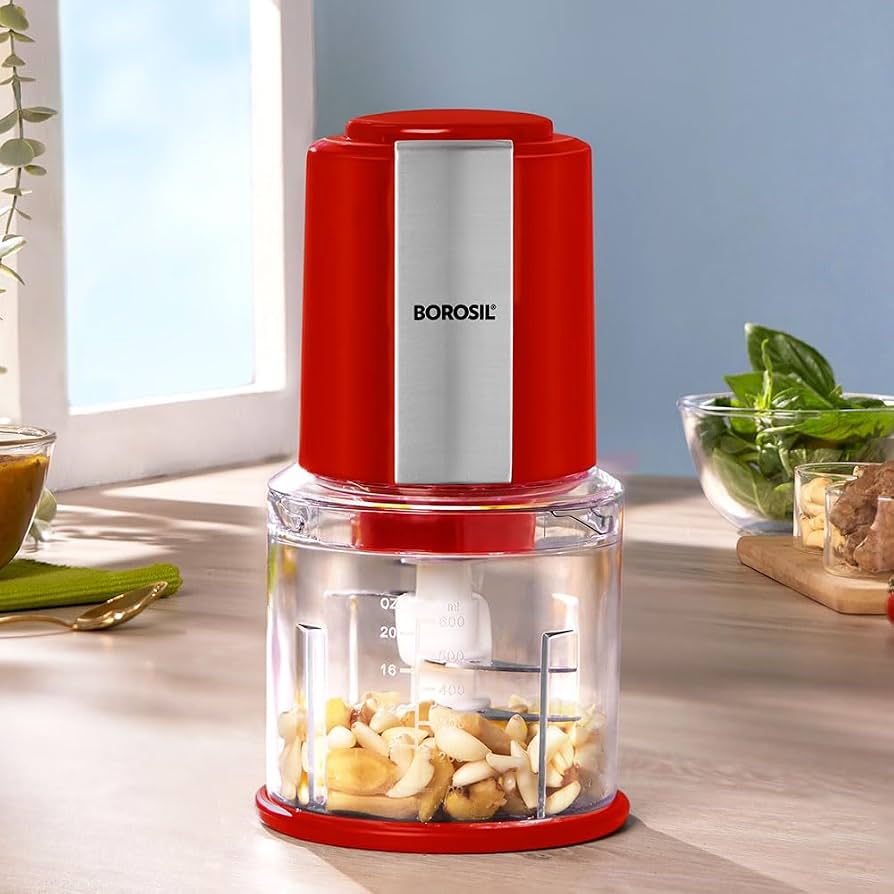
Consider an Electric Chopper if:
- You routinely prepare meals for four or more people.
- You do batch meal prep on weekends.
- You suffer from wrist fatigue, joint pain, or arthritis.
- You regularly make purees, fine chutneys, or fresh baby food.
Summary
Neither chopper type is strictly superior to the other. Manual choppers deliver unbeatable value, simple storage, and quick cleanup for lightweight daily tasks. Electric choppers require a higher upfront investment, but they save substantial time and physical effort when handling heavy prep for larger households. Assessing your kitchen space, cooking frequency, and physical comfort will guide you to the right choice.
FAQ
Can a manual vegetable chopper puree food completely?
Manual choppers can chop food very finely if you pull the cord repeatedly, but they cannot create smooth liquid purees. Ingredients like cooked tomatoes or fruits will remain textured rather than completely liquefied.
Can electric choppers process hard vegetables like raw beetroots or carrots?
Yes, most electric choppers process firm root vegetables easily. To protect the motor and blades, cut dense vegetables into smaller one-inch pieces before placing them into the bowl.
Are manual pull-cord choppers durable?
A well-made manual chopper can last several years with gentle use. The most common point of failure is the internal spring or cord mechanism, which can wear out if you yank the cord too hard past its natural stopping point.
Do electric choppers use a lot of electricity?
No. Kitchen choppers typically use small motors ranging from 200 to 500 watts, and they only run for a few seconds at a time. Their overall power consumption is minimal.
What should I do if food gets stuck under the blades?
Stop chopping immediately. Remove the lid, use a soft silicone spatula to scrape the food off the sides and redistribute it evenly in the bowl, then resume chopping. Forced operation can jam or damage the blade hub.